
Search Minnesota Warrant Records
Minnesota warrant records are kept by courts and law enforcement in all 87 counties. You can search them online for free. The state court system runs a public portal that covers every county in Minnesota. Just look up a name or case number to find warrant records and related case data. Each county has its own Sheriff's Office and District Court that handle warrants. The Bureau of Criminal Apprehension keeps a statewide warrant file too. Start with the county where the case was filed to get the records you need.
Minnesota Warrant Records Overview
Minnesota Warrant Records Online
The best place to start a Minnesota warrant records search is Minnesota Court Records Online. This is the state's free public access portal for court case data. It covers all 87 county District Courts. You can search by name, case number, or case type. The system shows party names, charges, docket entries, and case status. It runs all day, every day. You can set up a free account for more features, or search as a guest. Not every document in a case file shows up online, but you get the basics from any county in the state. Documents filed before July 1, 2015 have limited access. For those older Minnesota warrant records, contact the court in the county where the case was filed.
The Minnesota Judicial Branch website lists contact details and hours for every county court office in the state.
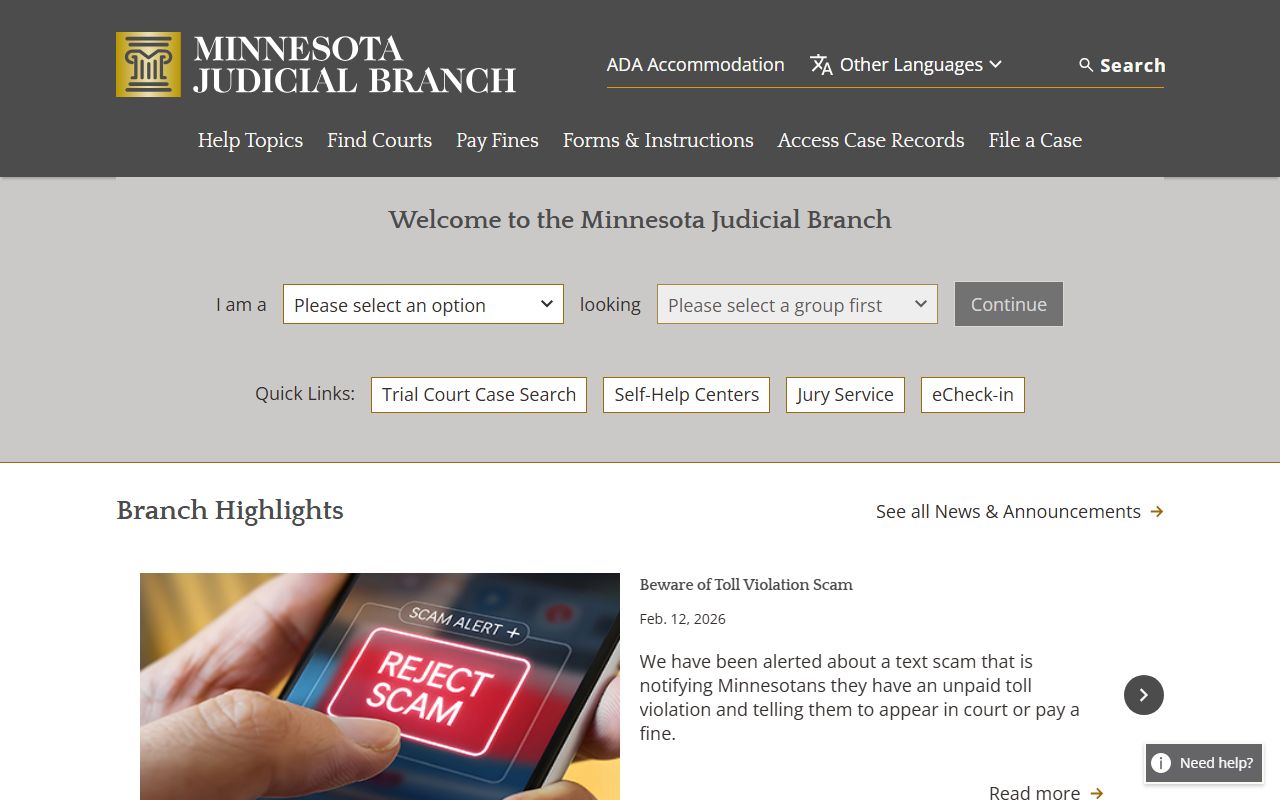
Use that site to find phone numbers and office hours for the District Court in any Minnesota county. Staff can help you look up warrant records by phone or in person.
The Bureau of Criminal Apprehension runs a free criminal history search at cch.state.mn.us. It shows conviction records going back 15 years. You need a first name, last name, and date of birth. It does not show active warrants. It does not include arrest data or records from other states. Printed copies at the BCA office in St. Paul cost $4 at 1430 Maryland Avenue East. If a record has an error, call 651-793-2420 to contest it. This tool works for checking criminal history, but for actual Minnesota warrant records, use the court system or the Sheriff's Office in the county.
The Minnesota Department of Public Safety oversees the BCA and other law enforcement agencies across the state.
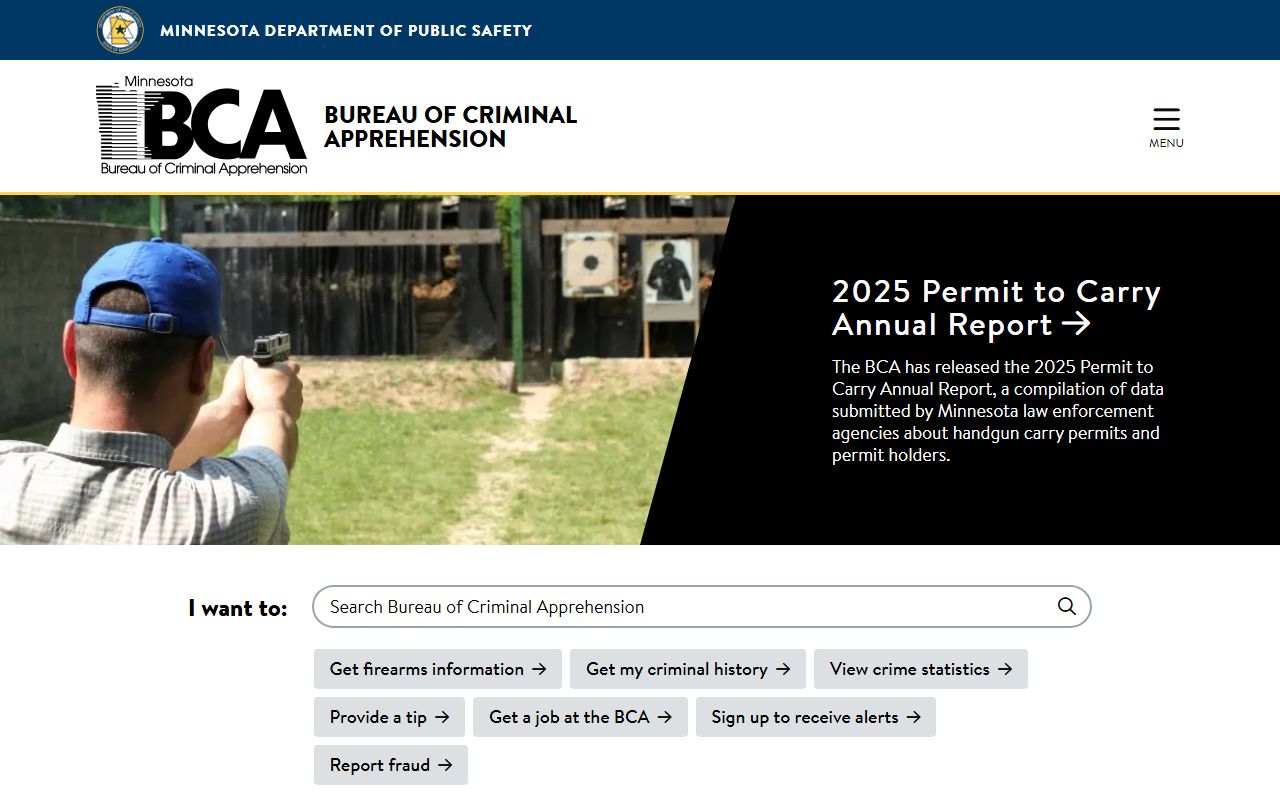
The BCA serves as the state hub for sharing criminal justice data between all 87 Minnesota counties.
The Department of Corrections keeps a separate list of wanted fugitives. These are people who broke the terms of their supervised release. You can search the DOC wanted fugitives database online. There is a 24-hour tip line at 651-603-0026. Tips can also go to Crime Stoppers at 1-800-222-TIPS.
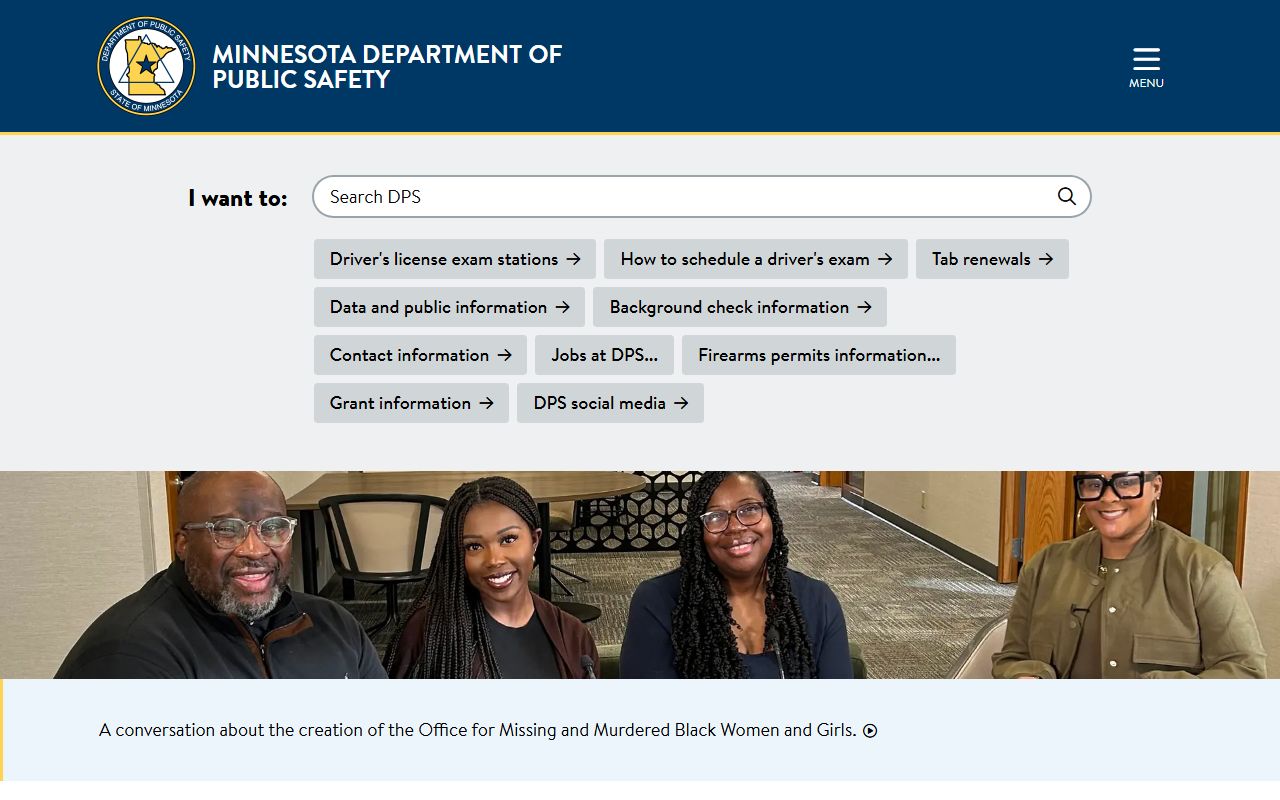
The DPS site links to several tools for searching Minnesota law enforcement and warrant records statewide.
Minnesota Warrant Record Types
Minnesota law defines several kinds of warrants, and each one creates its own set of records. Search warrants are the most detailed type in the court file. Under Minn. Stat. § 626.05, a search warrant is an order in writing signed by a court, directed to a peace officer, telling that officer to search a specific person or place and seize specific property for the court. The law says the warrant must name the exact target. It must list the exact items. Probate courts cannot issue search warrants. Only courts with jurisdiction over the place to be searched can sign them, as spelled out in Minn. Stat. § 626.06.
The full text of the Minnesota search warrant definition statute is available on the Revisor of Statutes website.
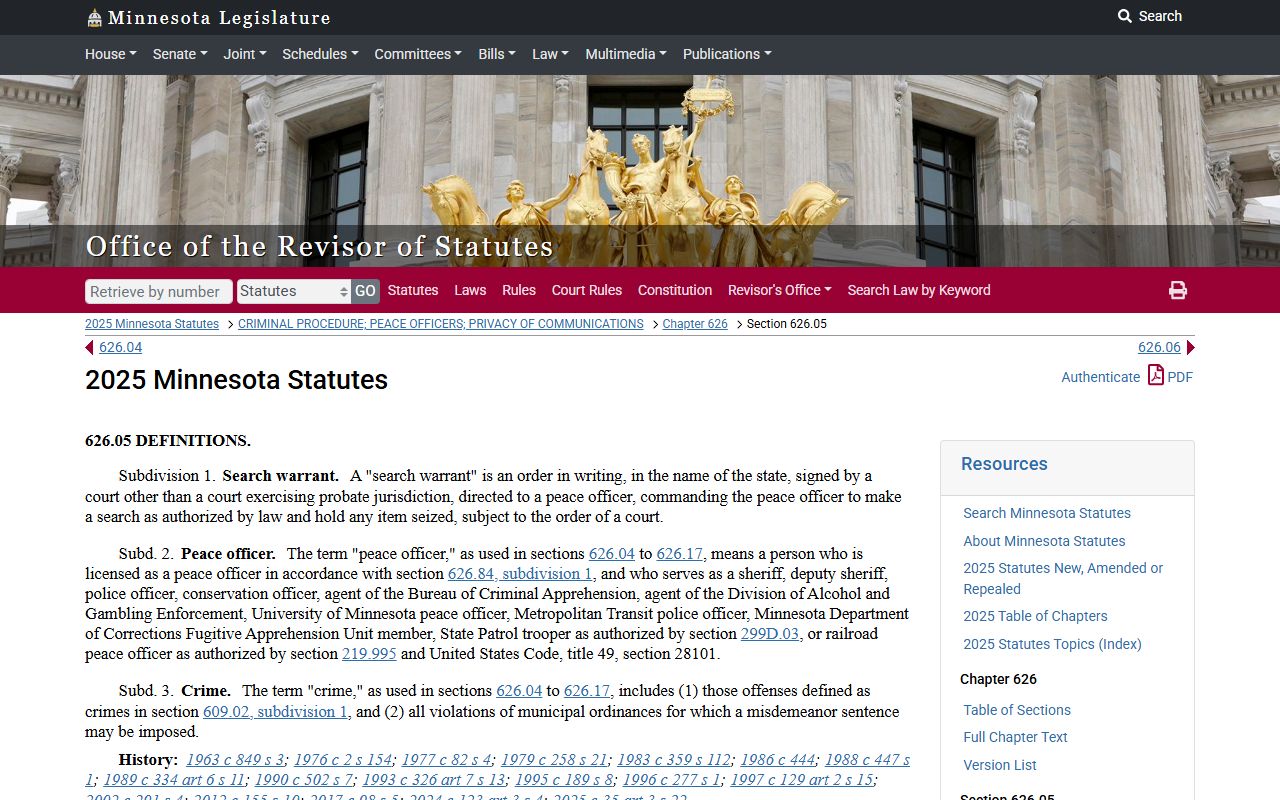
That page shows the legal language courts rely on when creating search warrants in any Minnesota county.
Arrest warrants are another major type of warrant record. Under Minn. Stat. § 629.41, judges can issue arrest warrants at any time. This includes weekends and holidays. Court commissioners and justices of the peace also have this power. Bench warrants come from the court when someone misses a hearing or ignores a court order. All of these warrants go into the court record. You can look them up through the county District Court or the local Sheriff's Office.
The jurisdiction statute explains which courts can issue warrants for locations in their county.
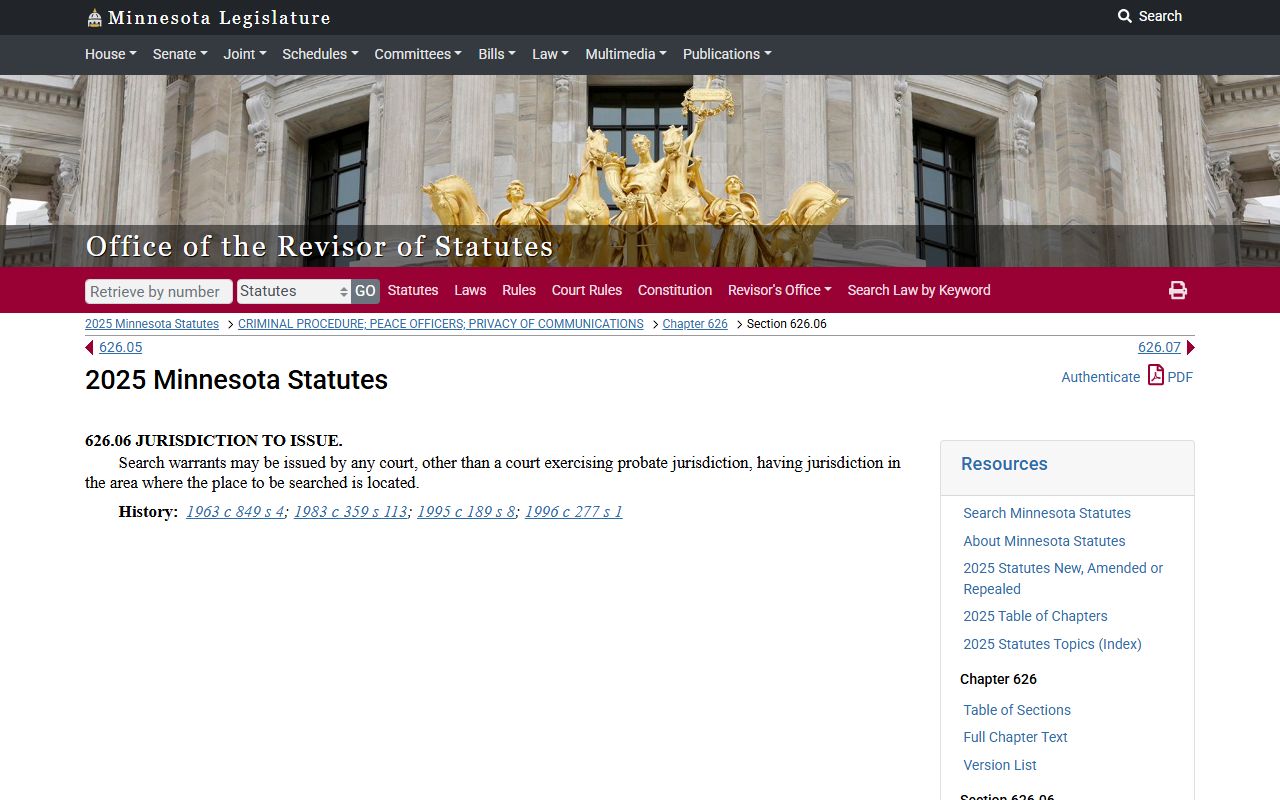
A warrant must come from a court in the county where the search will take place. This rule matters if you are trying to find where a warrant record is stored.
How Minnesota Warrants Are Created
Every warrant starts with probable cause. Under Minn. Stat. § 626.08, no search warrant can be issued without probable cause backed by a sworn affidavit. The affidavit must name or describe the person with detail. It must describe the property to be seized. It must describe the place to be searched. This keeps warrants specific and prevents general searches. These strict rules mean that every Minnesota warrant record has a detailed affidavit behind it, which becomes part of the court file.
The probable cause requirement is published on the Revisor of Statutes site.
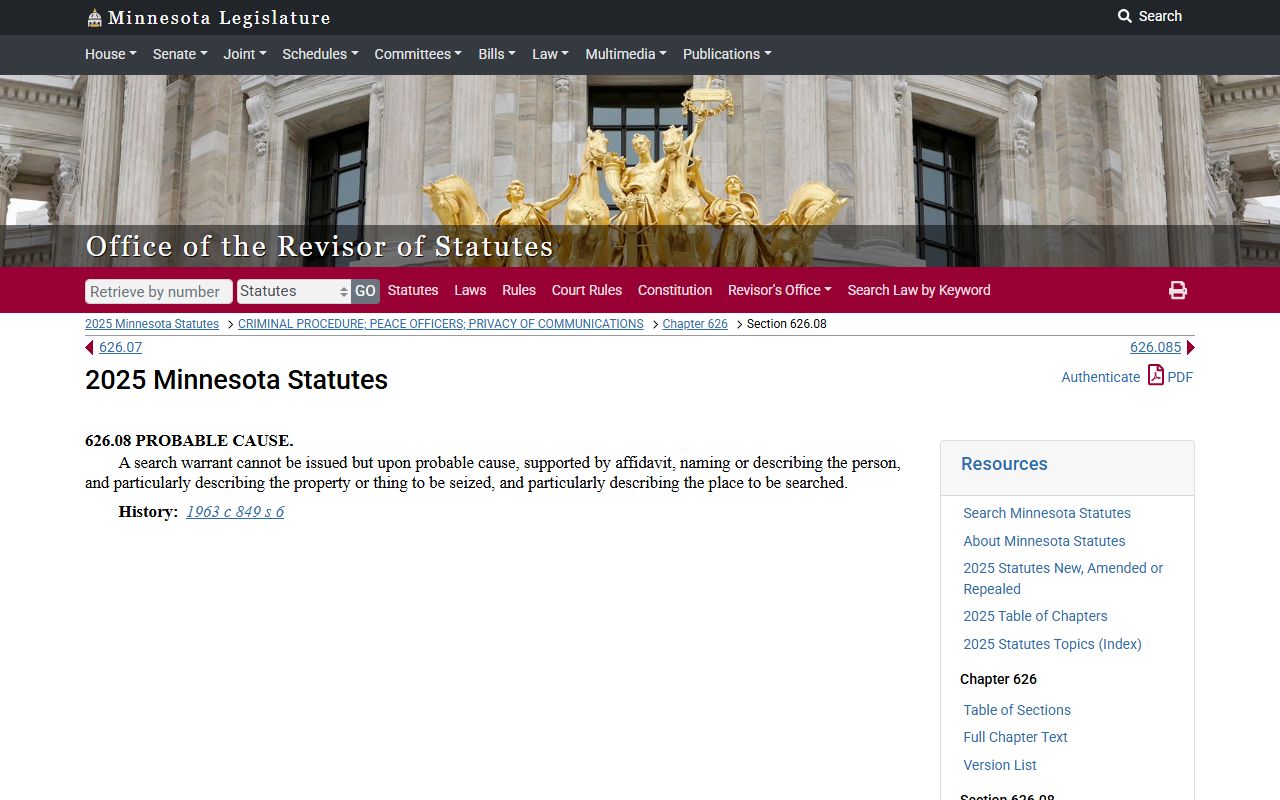
This statute mirrors Fourth Amendment protections and requires written proof before any Minnesota court can issue a warrant.
Minn. Stat. § 626.07 lists five specific grounds for a search warrant in Minnesota. The property must be stolen, used to commit a crime, illegal to possess, held with intent to use for a crime, or serve as evidence of a crime. No other reasons qualify. Each warrant application must name which of these five grounds applies and include facts to support it. If the application does not fit one of these five categories, the judge must deny it. Once a judge finds probable cause exists, Minn. Stat. § 626.11 says the judge shall issue the warrant. The word "shall" makes it mandatory. The judge signs the warrant and sends it to a peace officer for service, even if that officer works outside the officer's normal jurisdiction.
The five grounds for warrant issuance are listed in full on the state website.
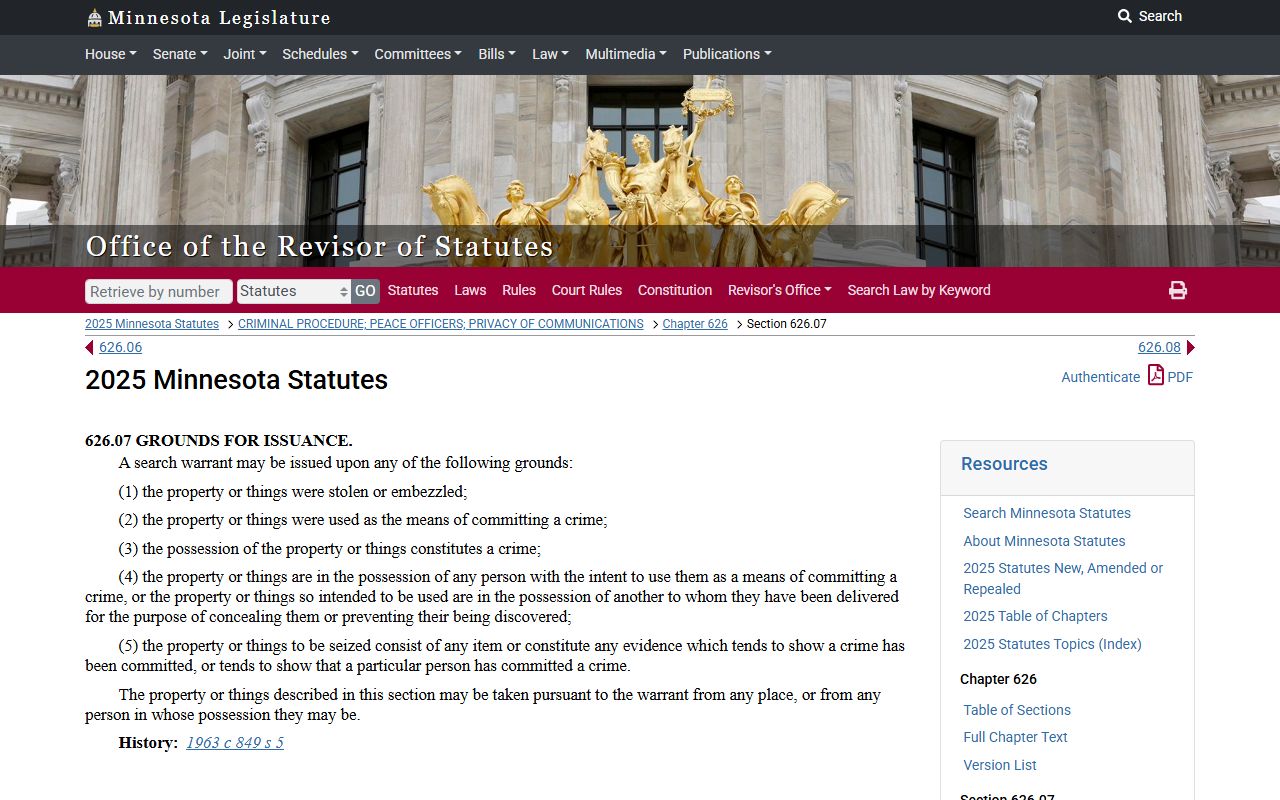
Every Minnesota warrant record traces back to one of these five grounds. The application must specify which one applies.
The warrant issuance statute explains what happens after the judge reviews the application.
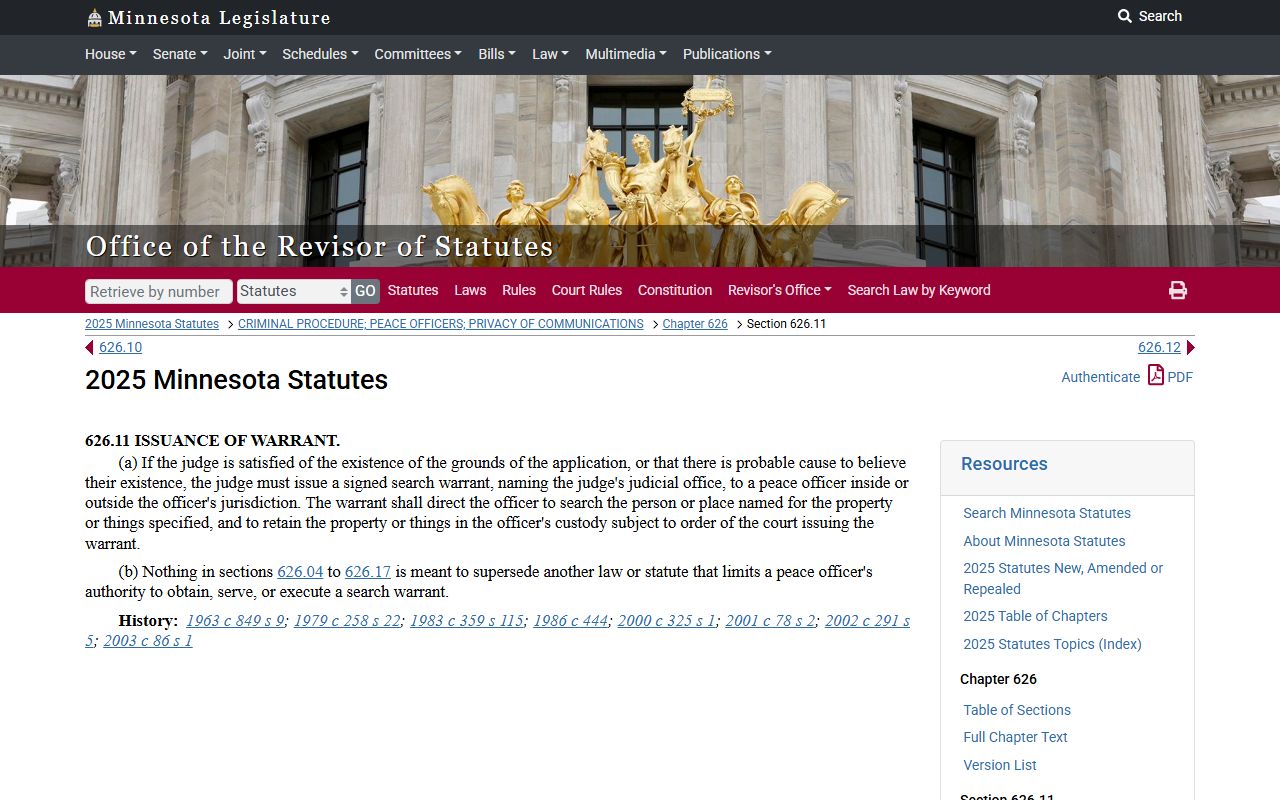
Once signed, the warrant goes to a peace officer. All of these steps create records that become part of the court file in the county where the warrant was issued.
Note: Minnesota also allows warrants based on oral testimony under Rule 36 of Criminal Procedure when getting a written affidavit is not practical.
Minnesota Warrant Execution Rules
After a judge signs a warrant, officers have a set time to carry it out. Minn. Stat. § 626.15 says search warrants must be executed and returned to the court within 10 days. After that, the warrant is void. It cannot be used. Financial institution warrants get more time. They are valid for 30 days, and a district court judge can grant one more 30-day extension. Once the warrant is executed, the records go back to the court.
Service hours follow strict rules too. Minn. Stat. § 626.14 limits warrant service to between 7:00 a.m. and 8:00 p.m. unless the court gives special permission for a nighttime search. For nighttime service, the affidavit must clearly state that the property is at the location. No-knock warrants face an even higher bar. The law requires proof of two things: that the search cannot happen while the place is empty, and that someone inside poses a real threat of death or serious harm. A chief law enforcement officer or designee must review every no-knock warrant application before it goes to the judge. The department must also report no-knock warrant use to the Bureau of Criminal Apprehension each year.
The service and no-knock warrant rules are on the Revisor website.
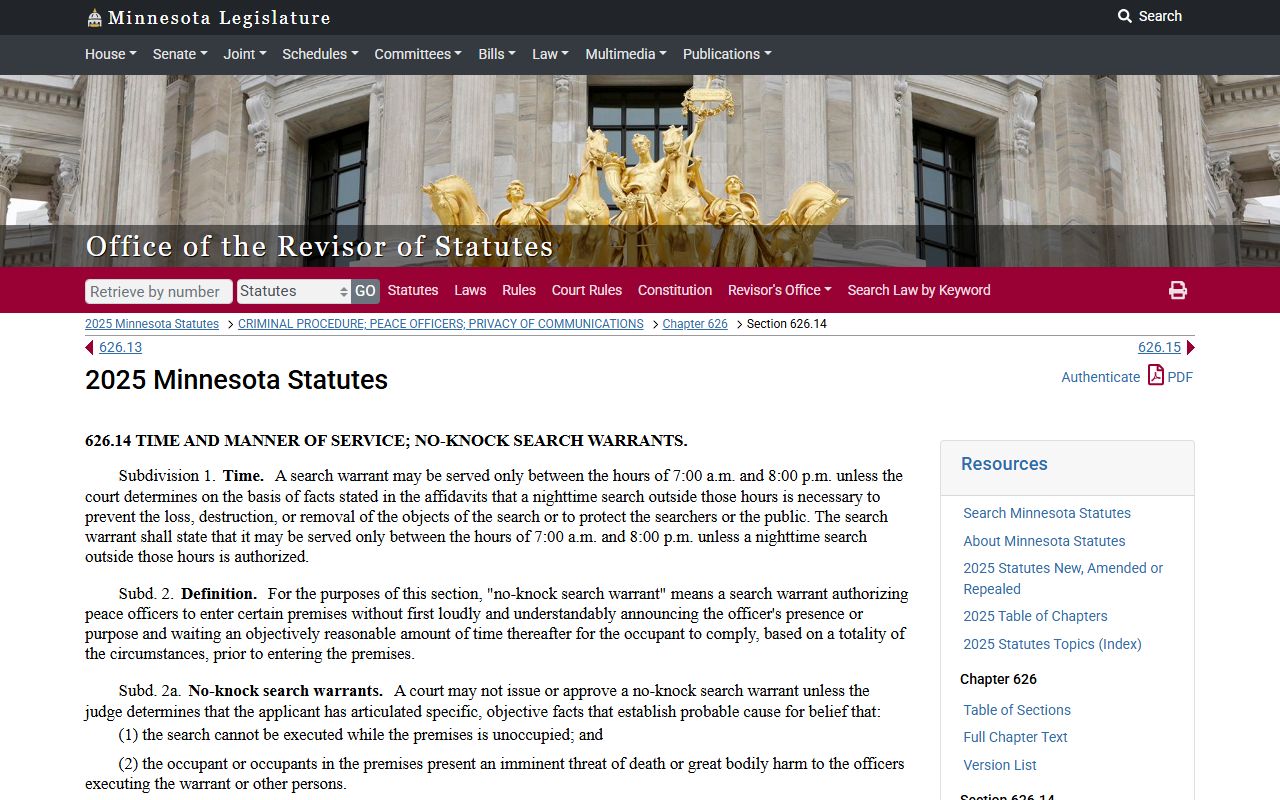
This statute sets the hours for warrant service and explains the special rules for no-knock warrants in Minnesota.
After a warrant is served, officers must give the person a copy of it along with a detailed list of anything they took. Minn. Stat. § 626.16 requires this. If no one is home, the copy and receipt stay at the location. Then, per Minn. Stat. § 626.17, the officer returns the warrant to the court with a sworn inventory of all seized property. Property seized under a warrant must be held safely under court direction per Minn. Stat. § 626.04. Owners can file a petition to get property back if it has not been returned within 48 hours of a written request. The court must hold a hearing within 30 days of that petition. All of these steps produce records that are filed with the court.
The property seizure and return rules are available at the Revisor website.
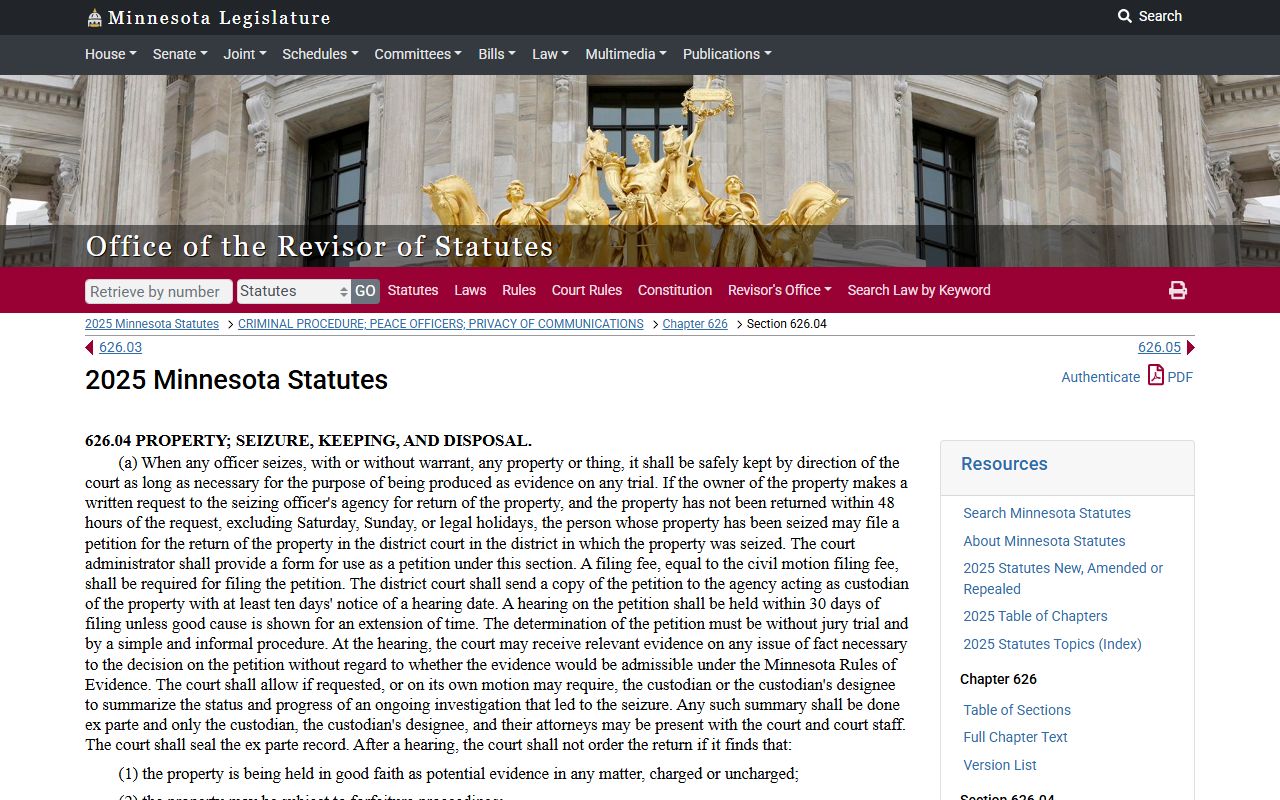
This law governs how seized property is handled after a warrant is served in Minnesota.
Are Warrant Records Public in Minnesota
It depends on the type and status of the record. Minn. Stat. § 13.82 lays out the rules. Arrest data is public. That includes the charge, the arrest or search warrant, and the legal basis for the action. Once someone is arrested on a warrant, that warrant becomes part of the public arrest record. Anyone can request a copy.
Arrest warrant indices have different rules. The data in those indices stays confidential until the person is taken into custody, served with the warrant, or appears in court. After any of those things happen, the data opens up. Law enforcement can also choose to release warrant index data early if they decide it serves a public purpose. Many Sheriff's Offices do this when posting most-wanted lists or active warrant databases on their websites. Active investigation data stays confidential while the case is open. An investigation becomes inactive when prosecutors drop it, the statute of limitations expires, or all appeals run out. Public conviction records are available for 15 years after the sentence is finished, including any probation or parole time.
The comprehensive law enforcement data statute is on the Revisor website.
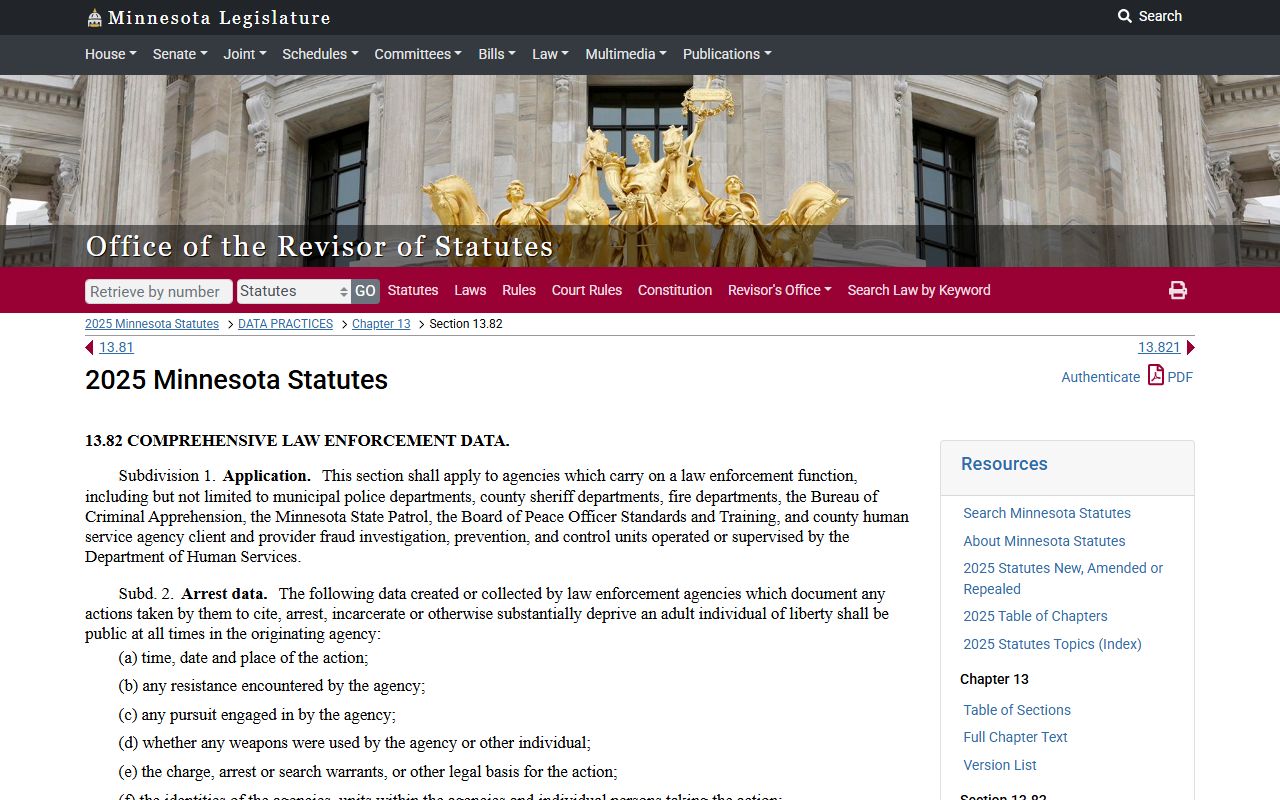
This is the key law for understanding what Minnesota warrant records are public and which ones stay sealed or restricted.
Minnesota criminal procedure rules also shape how warrant records are handled. Rule 36 covers oral testimony warrants. Rule 37 covers the standard written affidavit process. Both rules allow electronic signatures and electronic transmission of warrants. Documents filed under either rule become part of the court record and are available for review. The rules work together with Minnesota Statutes Chapter 626 to create a detailed paper trail for every warrant issued in the state.
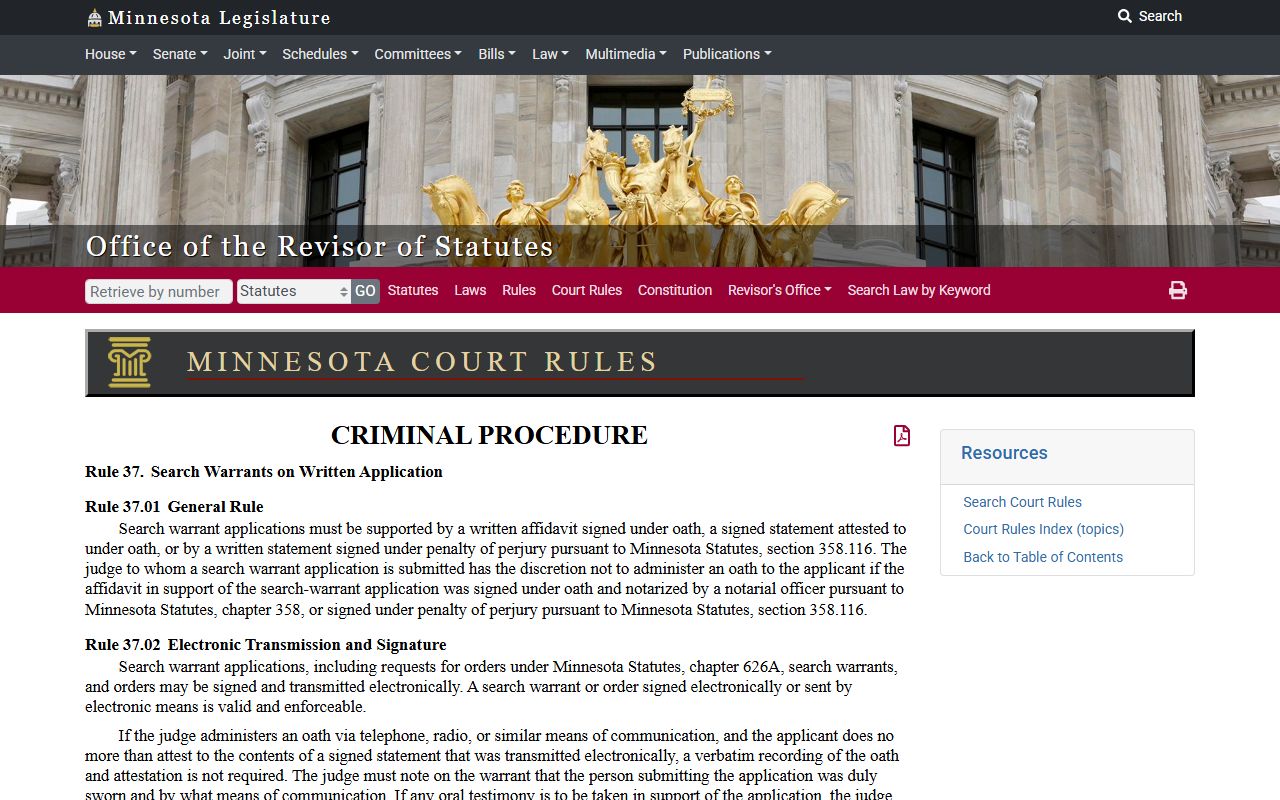
These court rules explain how warrant applications are filed and how the resulting records are stored in the court system.
Minnesota Warrant Records Database
Minn. Stat. § 299C.115 requires every Minnesota county to share warrant information through a statewide computer network. Counties can meet this by entering warrant data into the BCA warrant file, or by making their own systems accessible through the BCA network. The mandate covers all outstanding felony, gross misdemeanor, and misdemeanor warrants for adults and juveniles. The deadline for compliance was January 1, 1996, so every county in the state should have its warrant data connected to the system by now.
The statewide warrant information sharing statute is published online.
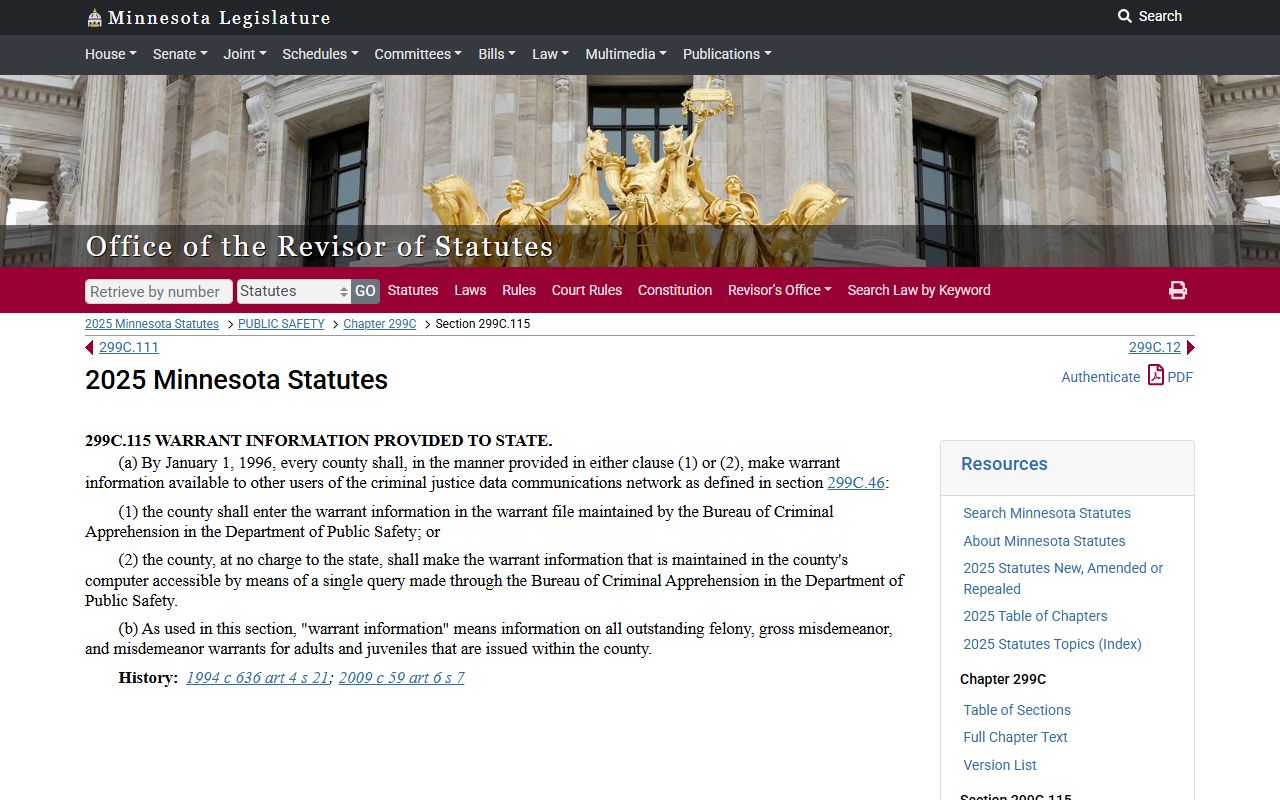
This law is what requires all Minnesota counties to share their warrant data through a central network.
The BCA serves as the central hub for this system. Law enforcement from any county can check if a person has warrants from another part of the state. This helps during traffic stops, investigations, and other contacts. Some counties go further by posting active warrant lists on their own websites. Kandiyohi County, Lake County, Kanabec County, and several others make their active warrants available to the public online at no cost. The statewide system keeps Minnesota warrant records connected across all 87 counties and 10 judicial districts.
The Minnesota Revisor of Statutes website hosts the full text of all warrant-related laws.
All Minnesota statutes related to warrants, court procedure, and public data access are available on this site for free.
Note: Some Minnesota counties publish active warrant lists on their websites, but not all do. Check the Sheriff's Office page for the county you need.
Browse Minnesota Warrant Records by County
Each of Minnesota's 87 counties has its own Sheriff's Office and District Court that handle warrant records. Pick a county below to find local resources, contact info, and search tools for warrant records in that area.
Warrant Records in Major Minnesota Cities
City residents handle warrant records through their county's court system. Pick a city below to find which county handles it and how to search for warrant records in your area.